
Signs Your Child Has Myopia

Signs Your Child Has Myopia

Signs Your Child Has Myopia

Signs Your Child Has Myopia

Signs Your Child Has Myopia
Myopia is one of the most prevalent vision issues affecting children worldwide, with rates steadily increasing in recent decades. It typically begins in childhood and can continue to progress throughout the teenage years, often stabilizing in early adulthood. Understanding the signs and symptoms of myopia in children is crucial for early detection and effective management.
Understanding Myopia and Its Impact on Vision and Eye Health
Myopia is a refractive error where distant objects appear blurry while close objects can be seen clearly. This condition occurs when the eyeball is too long or the cornea is too curved, causing light to focus in front of the retina instead of directly on it. Genetics and environmental factors, such as excessive screen time or limited outdoor activities, play a role in its development.
The impact of myopia extends beyond just the inconvenience of blurry distance vision. If left uncorrected or unmanaged, myopia can increase the risk of serious eye conditions, including retinal detachment, glaucoma, and cataracts. High myopia, or severe nearsightedness, can cause degenerative changes in the eye, leading to complications that threaten long-term vision and eye health.
Recognizing the Signs and Symptoms of Myopia in Children
Recognizing the signs and symptoms of myopia in your child is the first step towards addressing the issue. Here are some common indicators that your child may be experiencing myopia:
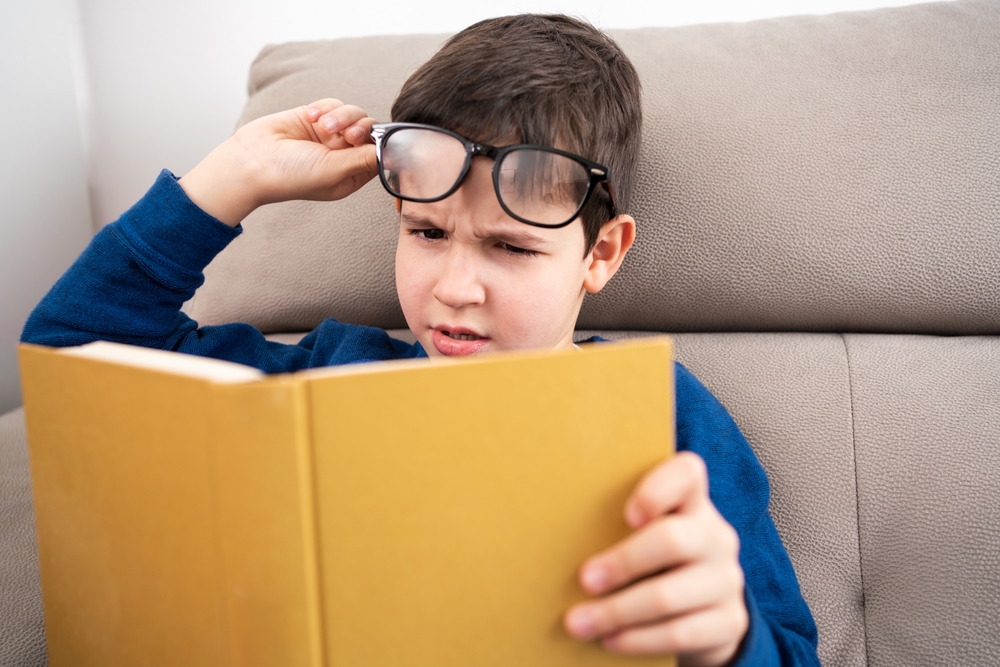
• Squinting or Struggling to See Distant Objects: If your child frequently squints or leans in closer to see distant objects, such as the television, whiteboard, or road signs, it may be a sign of myopia.
• Frequent Headaches or Eye Strain: Children with myopia often experience headaches or eye strain, especially after prolonged periods of close-up work, such as reading or using digital devices.
• Tilting or Covering One Eye: Your child may tilt their head or cover one eye to improve their focus on distant objects, a common coping mechanism for those with myopia.
• Difficulty with Night Vision: Myopic children may have trouble seeing clearly in low-light conditions, such as when driving at night or in dimly lit rooms.
• Sitting Too Close to the TV or Computer Screen: If your child consistently sits very close to the television or computer screen, it could be a sign that they are struggling to see the content clearly from a distance.
If you notice any of these signs in your child, it's important to schedule a comprehensive eye exam with an optometrist to determine the presence and extent of myopia.
The Importance of Early Detection Through Regular Pediatric Eye Exams
Regular pediatric eye exams are crucial for the early detection and management of myopia in children. The American Optometric Association recommends that children have their first comprehensive eye exam at 6 months of age, followed by additional exams at 3 years old, 5 years old, and then annually thereafter.
These comprehensive eye exams not only assess your child's vision but also evaluate the overall health of their eyes. By catching myopia early, optometrists can implement appropriate treatment and management strategies to slow the progression of the condition and prevent potential long-term complications.
During a pediatric eye exam, the optometrist will assess your child's visual acuity, refractive errors, eye alignment, and overall eye health. They may also use specialized tests and techniques, such as cycloplegic refraction, to accurately measure the degree of myopia and identify any underlying issues.
By staying proactive with regular eye exams, you can ensure your child's visual development and eye health remain on track, setting them up for success in all areas of their life.
Myopia Management Techniques and Treatments
Once myopia is diagnosed, there are several effective management techniques and treatments available to help control its progression and minimize the impact on your child's vision and eye health. Some of the most common approaches include:
• Atropine eye drops: Low-dose atropine eye drops are used to slow the progression of myopia by relaxing the eye's focusing mechanisms.
• Multifocal contact lenses: These lenses provide multiple zones of vision correction, helping reduce eye strain and control the progression of myopia.
• MiSight®: A specialized contact lens designed specifically to manage myopia in children by slowing its progression through a unique dual-focus design.
• Ortho-K: Also known as orthokeratology, this involves wearing custom-designed rigid contact lenses overnight to temporarily reshape the cornea and reduce myopia.
Your optometrist will work closely with you to develop a customized plan that addresses your child's specific condition and goals.
Schedule a Pediatric Eye Exam with Family Eye Care Center of Atlanta Today
Myopia is a prevalent and often progressive vision condition that can have a significant impact on a child's visual development, eye health, and overall quality of life. By understanding the signs and symptoms of myopia, the importance of regular pediatric eye exams, and the available management techniques, you can take proactive steps to ensure your child's visual needs are met and their eye health is protected.
At Family Eye Care Center of Atlanta, we are dedicated to providing comprehensive eye care services for children and families. Dr. Locke is committed to early detection, effective management, and personalized treatment of myopia and other vision conditions. Contact our office in Atlanta, Georgia, by calling (404) 905-1400 to schedule an appointment today to ensure your child's eyes are healthy and their vision is on track.

All Eye
Care Services

Keep
In Touch
Get In Touch
For non-urgent questions, use the form below.
Contact Info
Clinic Hours
Monday: 8:30 AM - 1:00 PM
Tuesday & Thursday: 8:30 AM - 4:30 PM (Closed During 1 PM - 2PM)
Wednesday: 9:00 AM - 6:00 PM (Closed During 1 PM - 2PM)
Friday - Sunday: Closed
© 2026 Family Eye Care Center of Atlanta. All Rights Reserved Privacy Policy. Sitemap. Accessibility Statement.
Powered by:



